
A car can communicate speed even while parked. Curved body panels, angled headlights, and sculpted surfaces suggest movement before the wheels turn. Yet automotive designers have also explored actual motion, using mechanical features to transform a vehicle’s appearance and the way people interact with it.
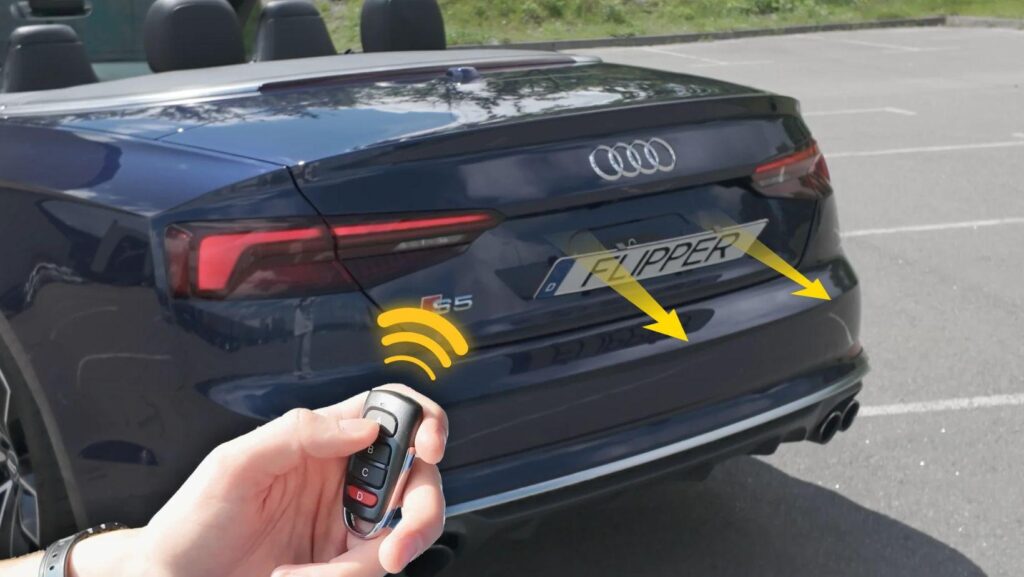
That interest extends from factory equipment to specialized accessories. A flipping license plate holder from Alite illustrates how a hinged assembly can change position through mechanical movement. Registration plates, however, must remain properly displayed and readable wherever public road regulations require them.
Motion as a Design Language
Early vehicle designers borrowed visual ideas from aircraft, boats, and industrial machinery. Long horizontal lines and streamlined profiles created an impression of forward momentum. Moving elements introduced another possibility: a car could physically change its silhouette.
A mechanism opening or retracting creates a brief moment of anticipation. The effect can make a practical operation feel memorable, particularly when the movement complements the vehicle’s overall shape.
Designers also study the sound and pace of moving components. A smooth, quiet transition may communicate refinement, while a sudden mechanical action can feel theatrical. Choosing the right character requires testing with users, not merely judging how a mechanism looks in photographs.
The Era of Pop-Up Headlights
Retractable headlights became a defining feature of several sports cars. Their closed housings helped preserve smooth front-end styling, while their raised position provided illumination when needed.
The transition was visually distinctive, but the mechanisms required motors or linkages, precise alignment, and regular maintenance. As lighting technology evolved, fixed headlights became easier to integrate into aerodynamic bodywork.
Even so, the appeal of pop-up headlights remains understandable. Their movement turned a routine action into a recognizable part of a car’s personality.
Where Movement Serves a Purpose
Automotive motion is not limited to dramatic styling. Many moving components solve practical problems:
- Convertible roofs: Transform the cabin for different weather and driving preferences.
- Active spoilers: Adjust aerodynamic surfaces under specified operating conditions.
- Retractable door handles: Preserve smooth exterior panels when not in use.
- Powered running boards: Extend to assist passengers entering taller vehicles.
- Folding seats: Reconfigure interior space for people or cargo.
Each feature involves a tradeoff between flexibility and complexity. The most effective designs justify their moving parts through a clear benefit.
Engineering a Reliable Transformation
A compelling animation on a design screen does not guarantee a dependable real-world mechanism. Engineers must evaluate clearances, hinge geometry, mounting strength, and the forces involved throughout each movement.
Vehicle components also face vibration, road debris, moisture, and changing temperatures. A joint that works smoothly indoors may behave differently after thousands of cycles outdoors.
Electronic controls can make activation convenient, but sensors and motors introduce additional failure points. Accessible maintenance and predictable behavior when power is lost are therefore important considerations.
When Visual Drama Meets Regulation
Exterior modifications can affect safety and vehicle identification. Moving lights, panels, and registration equipment may be subject to specific rules depending on the jurisdiction.
A feature suitable for a private display is not necessarily legal for public-road operation. Designers and owners should confirm applicable requirements rather than assuming that an accessory’s mechanical capability permits its use everywhere.
Good automotive design treats safety and compliance as essential constraints, not obstacles to creativity.
Why Designers Keep Returning to Motion
Movement invites attention because it reveals a product’s function over time. A concealed element appears, performs its task, and returns to a quieter form. This sequence creates an interaction that static styling cannot reproduce.
Nevertheless, motion works best when it feels deliberate. Unnecessary mechanisms can increase weight, cost, and repair demands without improving the driving experience.
The lasting fascination lies in balancing expression with utility. Whether a component folds, rises, or retracts, its movement should reinforce the vehicle’s character while remaining durable, understandable, and safe.