
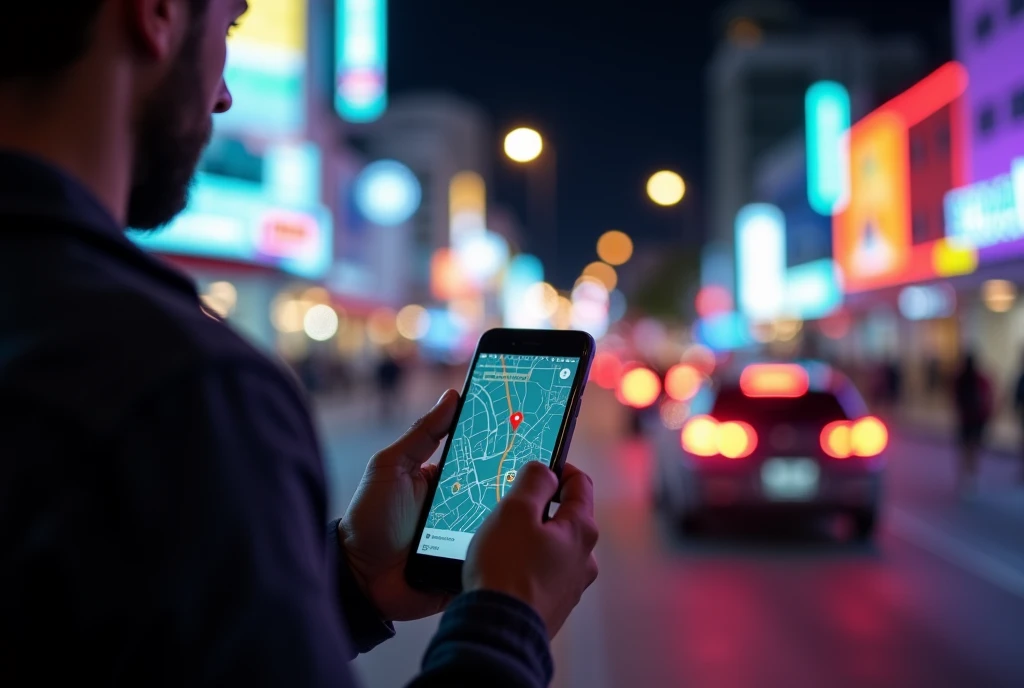
Mobile search in Miami begins inside movement, not before it. A person leaves a hotel in Brickell, walks a few blocks, stops under streetlight traffic, pulls out a phone, and immediately checks what is around without planning or filtering. The interaction is fast and direct: open maps, scan distance, switch to a browser, compare what is available right now. In that same sequence, escorts miami appears alongside nearby results, not as a separate goal but as part of a single flow where location, time, and immediate access define what is considered. The decision forms within seconds and rarely expands beyond the current radius.
Why distance replaces traditional search filters
Users do not filter by categories or descriptions anymore. Distance does the filtering automatically. In Miami, especially in areas like South Beach and Downtown, walking distance defines relevance.
The pattern is consistent:
- Under 0.4 miles, highest engagement and fastest decisions
- 0.4 to 1 mile, considered only if access is simple
- Over 1 mile, ignored in most cases
A listing that is two streets closer will outperform one with stronger content or visuals. Proximity controls attention.
How micro-location changes results within one block
Even within the same district, results shift depending on exact position. Standing on one side of a street versus the other can reorder what appears first. This happens because platforms prioritize micro-location signals tied to GPS accuracy and recent user movement. In Miami, where blocks are dense and activity is uneven, this effect becomes more visible. A user near a hotel entrance sees one set of options, while someone closer to a main road sees another. The difference is not random. It reflects traffic flow, user clustering, and real-time activity. This creates a situation where visibility is unstable and constantly updating within a very small radius.
How time pressure changes interaction speed
Most searches happen in compressed time windows. Users do not browse. They act under time constraints tied to nightlife, weather, and movement between locations.
Peak behavior follows clear blocks:
- 8 PM to 11 PM, steady increase in activity
- 11 PM to 2 AM, peak demand and fastest decisions
- After 2 AM, fewer options but higher urgency
During peak hours, users spend less than 60 seconds before selecting an option. Longer processes lead to immediate drop-off.
What users actually check on screen
Users scan, not read. The decision depends on a few visible elements that confirm whether the option fits the current situation.
The most influential signals are:
- Exact distance shown next to the listing
- Indication of current availability
- Visual match with the surrounding area
- No mismatch between map and real location
Anything unclear or inconsistent is skipped instantly.
How mobile conditions shape behavior
Mobile use in Miami often happens outdoors, in motion, and under unstable connection. Heat, noise, and movement reduce attention span and increase the need for simplicity.
Effective platforms match these conditions:
- Load within two seconds on mobile data
- Show key information without scrolling
- Require minimal interaction to proceed
- Keep layout simple and readable in bright light
If a page feels slow or overloaded, users exit without retrying.
Why real-time availability matters more than content
Static listings lose relevance quickly. Users expect current information that reflects what is available at that exact moment.
Active listings usually include:
- Updated availability within short intervals
- Accurate positioning within the current area
- Immediate response signals
Inactive listings fail because they introduce uncertainty. Users move on rather than wait.
Where demand concentrates in Miami
Demand is not evenly distributed. It clusters in specific zones tied to nightlife and tourism.
The strongest areas include:
- South Beach, highest density and fastest turnover
- Brickell, steady demand with short decision cycles
- Downtown, mixed demand with higher movement between spots
Services outside these zones receive significantly less attention unless they offer direct access or unique value.
What breaks the decision process instantly
Mobile search is fragile. Small issues can stop the process immediately.
The most common problems:
- Slow loading time
- Incorrect location data
- Extra steps before access
- Lack of clear availability
Each of these removes the option from consideration within seconds.
What defines visibility in mobile search
Visibility is temporary and tied to current conditions. It depends on being in the right place at the right time with the right signals.
Sustainable visibility requires:
- Presence within active demand zones
- Accurate and updated location data
- Fast and simple mobile performance
- Alignment with real user movement
Mobile search in Miami is not about exploration. It is about immediate selection within a limited radius. Location sets the boundary, time adds pressure, and behavior fills the gap between them.