
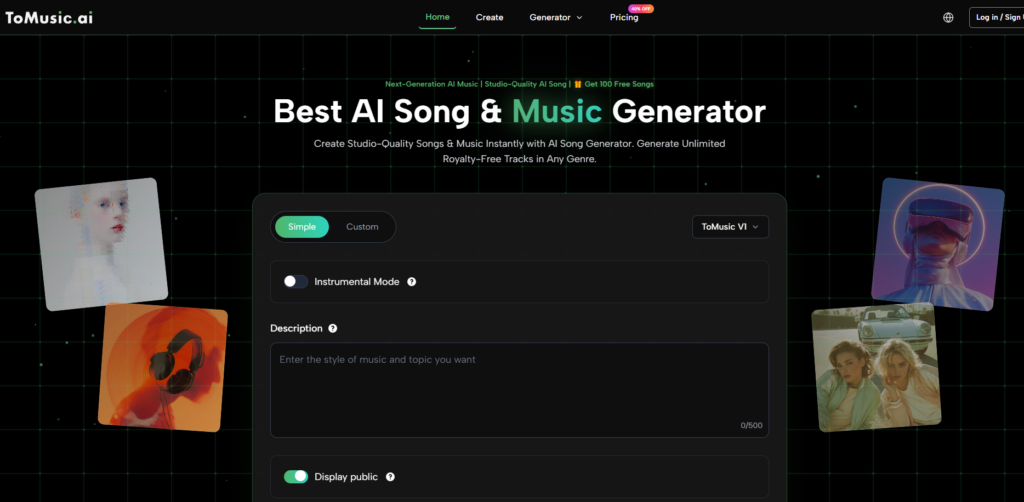
I tested ToMusic with one practical question in mind: could it help create a believable music demo before a full production decision is made? That is a different test from asking whether an AI Music Generator can instantly create a final release. A demo does not need to be perfect. It needs to communicate direction clearly enough for a creator, client, team, or collaborator to understand the idea.
This angle matters because many music ideas die before they are tested. A brand concept never gets audio because hiring a composer feels too early. A lyric remains in a document because the writer cannot imagine the arrangement. A video waits for music because the editor has not found the right tone. A game scene feels incomplete because the team cannot hear the mood yet. In each case, the problem is not the final production. The problem is the missing demo.
That is where ToMusic felt genuinely useful during testing. It gave me a way to produce rough musical directions quickly, compare them, and decide which emotional path deserved more attention. The results were not always final-ready, but they were often clear enough to move a conversation forward. For early-stage creative work, that can be more valuable than polish.
Why Demos Matter Before Final Production
A demo is not the finished product. It is a decision-making tool. It helps people hear direction before investing too much time, money, or emotional energy into a single idea.
Creative Teams Need Something To React To
Words like warm, premium, emotional, cinematic, youthful, or futuristic can mean very different things to different people. A demo turns those abstract words into sound.
When a team hears a track, the discussion becomes more concrete. People can say the rhythm is too fast, the vocal is too dramatic, or the mood is too dark. That is more useful than arguing over adjectives.
Early Music Can Shape The Whole Project
Music can change the perceived meaning of a scene, brand, or lyric. A soft piano track makes a story feel intimate. A synth-heavy arrangement makes it feel modern. A bright acoustic rhythm makes it feel friendly.
During testing, I found that a generated demo could quickly show whether an idea should become emotional, energetic, minimal, cinematic, or playful. That kind of clarity is useful before final production begins.
How I Built Demo Directions In ToMusic
For this test, I created different demo situations instead of trying to generate one perfect song. I wanted to see how well ToMusic could support early creative exploration.
The First Demo Was A Brand Theme
I imagined a small wellness brand needing a gentle audio identity. The prompt asked for calm, warm, minimal music with soft piano and light ambient texture. The first result was pleasant but slightly too cinematic.
After adjusting the prompt toward simplicity, subtle rhythm, and background use, the result felt closer to a brand demo. It was not overdramatic. It gave the imagined brand a clearer emotional shape.
The Second Demo Was A Lyric Pitch
I then tested a short lyric as if a songwriter wanted to pitch the mood of a song. The goal was not a finished master. The goal was to hear whether the lyric leaned better toward acoustic pop or cinematic ballad.
This was one of the most useful parts of the test. The same lyric felt more personal in an acoustic direction and more dramatic in a cinematic direction. That comparison helped identify which version supported the lyric better.
The Third Demo Was A Video Mood Test
I imagined a short documentary opening. The track needed to feel human, reflective, and restrained. The prompt had to explain the scene clearly because a generic “documentary music” request would be too broad.
When I added visual context, the generated track became easier to judge. It felt more connected to a real project rather than a general genre label.
The Official Workflow Supports Demo Iteration
The public ToMusic workflow works well for demo building because it does not require too many steps before hearing output.
The Workflow Keeps Early Testing Lightweight
Early-stage demos should not feel expensive or heavy. If testing a direction takes too much effort, people may avoid exploring alternatives. ToMusic made it easy to create several directions quickly.
When it is easy to test options, the user becomes less attached to the first idea. That leads to better comparison and more honest judgment.
Demo Testing Requires A Different Mindset
A final-song mindset asks, “Is this perfect?” A demo mindset asks, “Does this communicate the direction?” That difference made ToMusic feel more useful.
Not Every Good Demo Needs Final Polish
Some generated tracks had rough edges but still communicated the mood well. For demo purposes, that was enough. They helped answer whether the concept had potential.
In early creative work, the goal is often to choose a path. A polished wrong direction is less useful than a rough right direction.
The User Should Listen For Strategic Fit
When testing ToMusic as a demo tool, I listened for fit rather than perfection. Did the music support the intended identity? Did it match the emotional purpose? Did it help me explain the idea to someone else?
This type of listening changed the test. Instead of judging every output like a finished single, I judged it as a communication tool.
Text-Based Demo Creation Feels Efficient
Text-based generation is especially helpful for demo building because early ideas are usually described in words first. A creative brief, brand note, video outline, or lyric draft already exists as language.
The Prompt Becomes A Demo Brief
The value of Text to Music is that a written brief can quickly become audio. That makes the demo process feel more direct. The user does not need to translate the idea into production software first.
During testing, the strongest demos came from prompts that included audience, purpose, mood, instruments, and energy level. A demo for a premium product needed different wording from a demo for a personal song.
Text Helps Compare Multiple Directions Quickly
Because the input is written, it is easy to change one variable at a time. You can test the same idea as acoustic, electronic, cinematic, or pop. You can change the vocal tone. You can make the tempo slower or brighter.
This made comparison easier. Instead of generating unrelated tracks, I could test variations of the same creative concept. That helped me understand which direction worked best.
A Demo-Focused Test Comparison
The table below summarizes how ToMusic performed across demo-building situations.
|
Demo Type |
Test Goal |
What Worked Well |
What Required Care |
|
Brand theme |
Explore emotional identity |
Good for mood prototypes |
Needed restraint in prompt |
|
Lyric pitch |
Hear possible song style |
Useful style comparison |
Lyrics needed structure |
|
Video opening |
Match scene atmosphere |
Context improved relevance |
Generic prompts felt broad |
|
Product clip |
Test modern sound |
Fast direction building |
Avoiding overproduction |
|
Personal song |
Hear emotional potential |
Encouraged revision |
First version was not final |
|
Game theme |
Explore character mood |
Strong concept testing |
Needed clear tone labels |
The Best Use Was Directional Comparison
ToMusic was strongest when I used it to compare directions. One idea could become soft, bright, cinematic, intimate, or energetic. Hearing those differences made decision-making easier.
Without audio, it is easy to commit to an imagined direction too early. Hearing several demos made it easier to choose based on experience instead of assumption.
Where ToMusic Felt Strong In Demo Work
The platform felt useful in three specific ways: speed, flexibility, and revision support. These are important for demo work because the early stage of a project is often uncertain.
Speed Made Ideas Easier To Test
I could move from written idea to audio quickly. That meant I did not have to wait until the concept felt fully developed before hearing it.
Some ideas sounded less interesting than expected. That was still useful. A demo can save time by showing which ideas are not worth developing further.
Flexibility Helped Explore Multiple Creative Paths
Because ToMusic supports prompt-based and lyric-based creation, I could test both abstract concepts and song materials. That made it useful across different project types.
A brand demo, lyric demo, and video soundtrack demo are not the same task. ToMusic handled all three at a practical early-stage level.
What Felt Emotionally Honest During Testing
The most honest moment came when a demo I did not expect to like became the strongest direction. I had assumed a lyric needed a dramatic arrangement, but a simpler acoustic version felt more believable.
The Tool Challenged My First Assumption
That is one reason demo testing matters. The first imagined direction is not always the best. Hearing alternatives can reveal a better path.
AI generation is sometimes unpredictable, but unpredictability is not always bad. When used carefully, it can open directions the user had not considered.
Some Demos Were Clearly Not Right
Other results missed the mark. A few sounded too polished, too generic, or too emotionally broad. But even those failures helped clarify the project.
After hearing a wrong version, I could describe the desired version more accurately. That made the next prompt stronger.
Limitations Of Using ToMusic For Demos
ToMusic is useful for demo creation, but it should not be treated as a guarantee of final production quality. A demo can communicate direction without solving every musical detail.
Prompts Must Carry Project Context
The platform cannot know the full brand strategy, video edit, lyric history, or audience expectation unless the user explains enough. A thin prompt creates a thin demo.
The user needs to include the intended use, emotional role, and stylistic boundaries. That responsibility remains central.
Generated Demos May Need Several Attempts
The first result may be close, wrong, or somewhere in between. This is normal. Demo building works best when the user expects multiple versions.
Rather than hoping for one perfect output, it is better to generate a small set of options and compare them.
How I Would Use ToMusic In Real Projects
After testing, I would use ToMusic as an early-stage audio sketching tool.
Use It Before Hiring Or Producing Deeply
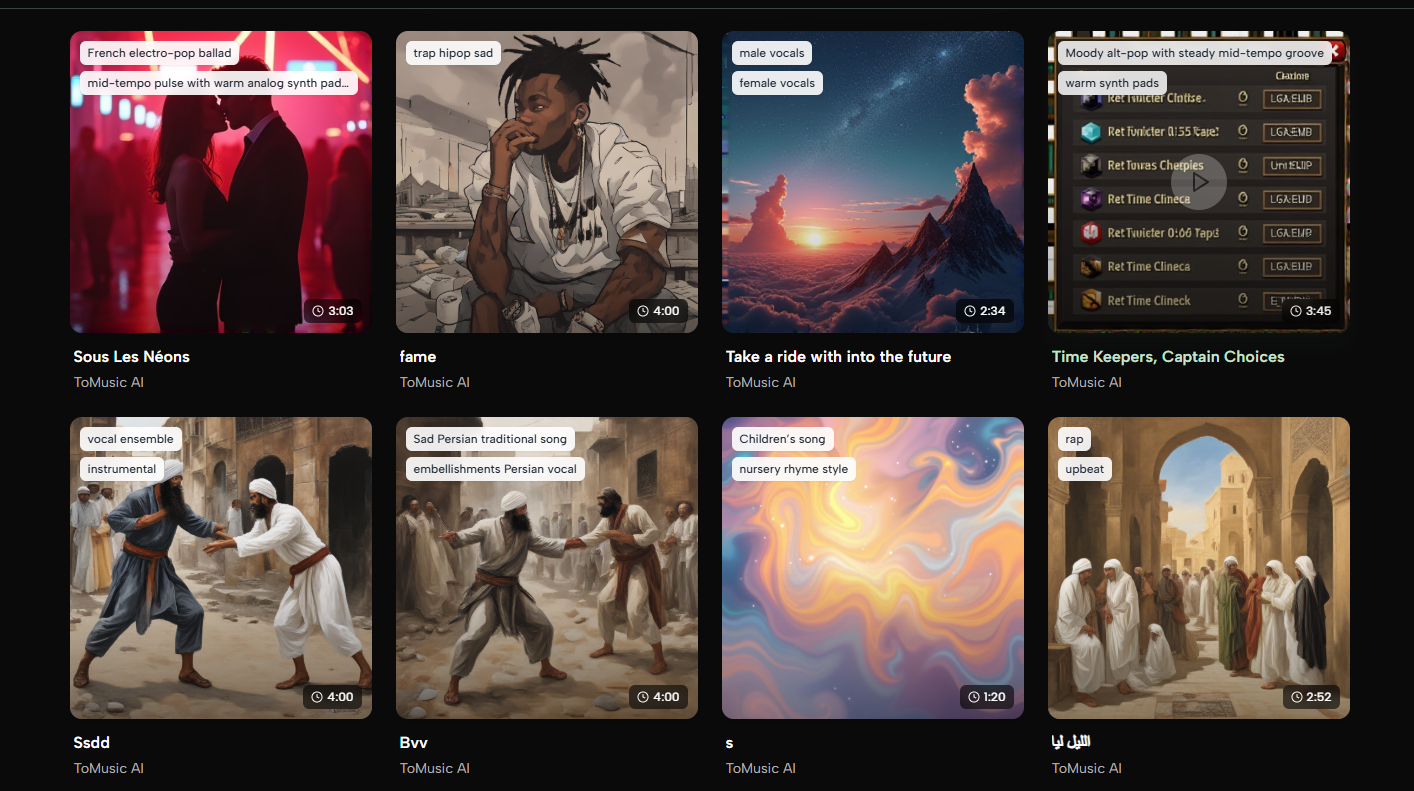
If a team is unsure what direction a song, campaign, or video needs, ToMusic can help create reference directions before deeper investment.
A generated demo can help explain what words alone cannot. It can make discussions faster and more specific.
Use It To Test Lyrics Before Commitment
For songwriters, ToMusic can test whether lyrics feel better as pop, acoustic, cinematic, or electronic. That can guide revision before recording or production.
A lyric may need shorter lines, clearer chorus contrast, or stronger section structure. Hearing it helps.
My Honest Verdict On Demo Testing
ToMusic worked well as a fast demo-building tool. Its biggest strength was not perfection. Its biggest strength was helping me hear directions early enough to make better choices.
It is most useful when the user treats generated tracks as drafts, references, and creative signals. It is less useful if the user expects every output to be final without revision. That distinction makes the experience more realistic and more productive.
The Platform Helps Decisions Happen Earlier
In creative work, earlier decisions often save time. ToMusic helps create audio evidence for those decisions. That is valuable for creators, teams, writers, and small brands.
I would use ToMusic again when I need to test a musical direction quickly, compare emotional options, or turn a written brief into a listenable demo. As a demo tool, it feels genuinely practical.